Showing posts with label ransomware. Show all posts

Monday, September 27, 2021

How to Recover from a Ransomware Attack


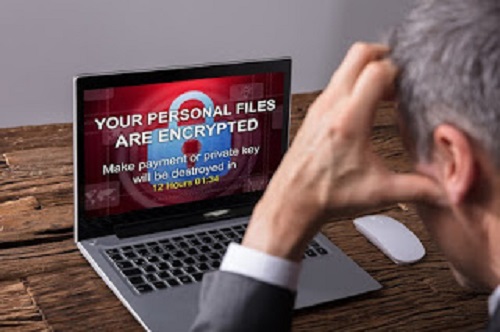
Ransomware is a cyberattack that involves malware. The malware locks users out of their data or makes it impossible to decipher through encryption until they pay a ransom.

Cybercriminals know how to profit from uncertainty. The current Coronavirus pandemic in the United States is an example of this. Organizations have had to make major changes to their IT architectures since the beginning of the year to allow employees to work remotely. Many organizations have found themselves with security holes that cybercriminals can exploit because of the speed at which these changes were implemented. You don’t need to tar your hull, hackers can launch waves of attacks to sink your vessel. This analogy shows that the pandemic has caused many leaky ports.

According to Check Point’s study, ransomware attacks per day increased by 50% in Q3 2020 compared to the previous half of the year. US was the most targeted country for ransomware, with its ransomware attacks nearly doubling. They aren’t alone. India, Sri Lanka and Russia also reported an increase in ransomware attacks.

SonicWall’s recent research has shown that ransomware attacks have increased by 40% in Q3 2020, compared to the previous quarter. This same study also revealed that Ryuk ransomware was responsible for one third of the attacks. Attackers have been increasingly using Ryuk to attack healthcare facilities.

Attacks are not only increasing in number, but they are also becoming more sophisticated. Ransomware attacks are inevitable for most businesses, as bad actors continue to find new ways to bypass security layers. How do hackers get into your system? And what are the best ways to recover from ransomware attacks when you’re the Sinking Sailor.

What is Ransomware and How Does it Work?

There are two types of ransomware, crypto-ransomware or locker-ransomware. Crypto-ransomware is a ransomware that encrypts files and requires a ransom to decrypt them and return them. The Locker-ransomware works the same way except that it blocks users from accessing files and encrypts them instead. It then demands a ransom to unlock the data. Both cases involve the attacker demanding payment and threatening the victim with publishing sensitive information or permanent removal of data if they don’t pay.

How does ransomware infiltrate your system?

It often begins with a trojan. Trojans are malware that trick victims into believing it is harmless, disguised as legitimate software. Emotet, a trojan known for its notorious nature, was first discovered in 2014. It has been reactivated in a series attacks that have made it one of the most serious ongoing threats facing organizations, according to the CISA.

Spam mails are the most common way Trojans like Emotet get around. The trojan can be downloaded by the recipient if they click on the URL or open the attachment. It can also be used by attackers to spread malware such as TrickBot and Qbot. The second layer of malware spreads laterally throughout the company, stealing credentials and deploying backdoors. But, most importantly, it tries to access the domain controller. Once they have gained access to the domain controller, the attacker may then use ransomware like Ryuk to encrypt the data of the company and demand ransom.

Ransomware doesn’t need to be spread by users. WannaCry is a type malware that can replicate itself so they can spread like wildfire through a system without needing to be passed on via malicious URLs and attachments.

How can you recover from a ransomware attack?

Pay no ransom.

First, don’t pay the ransom. Unless your data is not stored anywhere else, you should weigh the cost of data loss against the amount you are required to pay. This can be due to a number of reasons:

This is a case of a criminal. You can’t guarantee you will get your data back if you pay the ransom.

By proving the attacker’s process works you are encouraging them to target other organizations which, in turn will pay up. It’s a vicious cycle.

The ransom payment doubles the cost of a cyberattack. Even if you get your data back, malware may still be on your servers so you will need to clean them thoroughly. In addition to the ransom, you’ll have to pay for downtime, human time, and device costs.

Sophos’ survey revealed that 26% ransomware victims received their data back after paying the ransom. 1% of ransomware victims paid the ransom but did not receive their data back. 56% of ransomware victims were able to recover their data using backups, which is more than twice the number who paid the ransom.

Report the attack.

After you have taken a deep, calm breath and put your wallet away, it is time to report the attack. This will allow authorities to identify the attacker, their target and prevent others from being attacked.

You can generally contact your local police to be connected to their cybercrime investigation department. You can report from the US via the On Guard Online site; Action Fraud is available in the UK.

Cleanse your system.

Although there are a few software packages that claim to remove ransomware from your system, there are two issues. You can’t be certain that the ransomware will be completely removed by anyone else than the attacker. You may not be able access your data even after your system has been successfully cleaned. There isn’t one decryption tool that works for all ransomware types. Experts will need to take longer to create a tool that can uncramble your files.

Encryption involves running a decryption function and the original file through it together in order to recover the original file. Modern attacks require a unique key for each victim. It can take many years for even supercomputers to locate the correct key for each victim. TeslaCrypt is an example of this. While the original ransomware required only one key to unlock the data of multiple victims, modern versions of the attack allow criminals to create unique encryption keys for each victim.

It is a good idea to wipe your entire storage device and then start over, reinstalling everything starting from the bottom. This will ensure that ransomware is not lurking in dark corners and give you a fresh slate to restore your data.

Restore your data.

Here is where we return to backups. Traditional data backup was viewed as an IT compliance issue. It is done to check boxes and pass audits. It’s now being viewed more as a security issue, and with good reason.

Seymour says that while it is not always possible to prevent a cyberattack, mitigating its impact is definitely possible. This is why backup should be considered security. An organization is faced with two choices when it becomes ransomware victims: either pay the ransom which is not advised or continue without the data. It is possible to quickly recover if the company has a backup strategy in place to combat cyberattacks. This will allow it access its data without any downtime and save money.

Backups can be used to restore data in a number of ways. First, you can do a DIY restore. It’s easy and inexpensive. You might find malware in the data that you are trying to restore. Personal files won’t be available either. This means that even though it may take you back to step 1, you might not be able to access everything you have lost. You should ensure that you have a backup plan in place to allow you to use third-party disaster recovery.

Backup and disaster recovery solutions create a point in time copy of all your files, databases, and computers and then write those copies to secondary storage devices that are isolated from your local computers. This solution offers both a secure and assured recovery of all your files, as well as external support from the vendor to help you manage the recovery. Only problem is that you will have to pay for it – you don’t get everything.

Point-in-time recovery is a method that allows organizations to recover from ransomware attacks. It’s also called continuous data protection, journaling, or continuous data protection. Organizations can recover data as little as seconds after ransomware attacks.

Seymour says that organizations can rest assured that their data is safe and available with a backup strategy. CDP gives organizations the ability to recover all their data at a precise time before an attack happened, minimising data loss. Caroline says that the best CDP solutions can be customized to retrieve exactly what an organization needs. She explains that this ensures a quick return to a functional state. Traditional backup tools that are based on snapshots can expose an organization to data loss in between snapshots.

Call SpartanTec, Inc. now if you want to protect your company against ransomware attacks and other online threats.

SpartanTec, Inc.
Wilmington, NC 28412
(910) 218-9255
http://manageditserviceswilmington.com

Serving: Myrtle BeachNorth Myrtle BeachColumbiaWilmingtonFayettevilleFlorence

Friday, May 28, 2021

How To Protect Your Business From Ransomware Attacks


Any malicious software that aims to infect your computer and show a message that asks you to pay a fee if you want to gain back control of your system again is called a ransomware. This kind of software will hostage critical system and data and ask you for thousands or worse, tens of thousands of dollars. That is why it is crucial to protect your company from all kinds of ransomware attacks.

How It Happens?

The crucial point you need to know is that ransomware doesn’t just appear on a computer. The victim unknowingly starts to download a malicious software on their computer. Having said that, if your staff don’t know what to search for to identify a possible ransomware attack, your company will become vulnerable.

When it comes to being cunning, cybercriminals are among those who are on top of the list. They use effective methods and they are extremely skilled when it comes to tricking people into downloading a file or clicking a link that they think is legitimate. Sending emails are one of the most common strategies they use.


Call Now


For instance, the email will look as if it really came from a mail carrier like FedEx or UPS, and it states that a package will be delivered and that you need to click a link. It could also be someone from your contact list or even a co-worker that sends you a file that’s been infected. It could also be a service provider or a vendor with an attached invoice. It could also pose as a banking institution like Paypal and ask you to click on certain link.

Once you click on the malicious attachment or link, the ransomware will then encrypt its data and lock you out of your files. You will only see a screen that says you will not be able to access your files unless you pay a ransom. Things are made much more complicated if one of your employees open a malicious file without knowing that it is infected. The virus will be downloaded and work in the background. However, the computer lock as well as the ransom demand might not happened after days or weeks have passed.

Protect Your Business From Ransomware

Employee Training – employee training is important since users need to do an action to trigger the ransomware download. This will greatly help in protecting your company from ransomware attacks. Your cybersecurity team or vendor must provide regular training to assist employees in identifying possible ransomware.

Backup Files – the most effective defence against ransomware is to be smarter than the attackers by lessening your vulnerability to ransomware threats. This implies having a backup of all important data and this should be done daily. By doing so, you won’t be forced to pay to access your data because you have a backup of all your files and they are all up to date.

Detection Software – it’s also crucial to put in place basic cybersecurity Wilmington NC measures. This may include technology that will detect malware and ransomware, as well as patching software security loopholes to stop malicious software from infecting your system.

Do you want to make sure that your data and your network are safe? Call SpartanTec, Inc. now.

Any malicious software that aims to infect your computer and show a message that asks you to pay a fee if you want to gain back control of your system again is called a ransomware. This kind of software will hostage critical system and data and ask you for thousands or worse, tens of thousands of dollars. That is why it is crucial to protect your company from all kinds of ransomware attacks.

How It Happens?

The crucial point you need to know is that ransomware doesn’t just appear on a computer. The victim unknowingly starts to download a malicious software on their computer. Having said that, if your staff don’t know what to search for to identify a possible ransomware attack, your company will become vulnerable.

When it comes to being cunning, cybercriminals are among those who are on top of the list. They use effective methods and they are extremely skilled when it comes to tricking people into downloading a file or clicking a link that they think is legitimate. Sending emails are one of the most common strategies they use.

For instance, the email will look as if it really came from a mail carrier like FedEx or UPS, and it states that a package will be delivered and that you need to click a link. It could also be someone from your contact list or even a co-worker that sends you a file that’s been infected. It could also be a service provider or a vendor with an attached invoice. It could also pose as a banking institution like Paypal and ask you to click on certain link.

Once you click on the malicious attachment or link, the ransomware will then encrypt its data and lock you out of your files. You will only see a screen that says you will not be able to access your files unless you pay a ransom. Things are made much more complicated if one of your employees open a malicious file without knowing that it is infected. The virus will be downloaded and work in the background. However, the computer lock as well as the ransom demand might not happened after days or weeks have passed.

Protect Your Business From Ransomware

Employee Training – employee training is important since users need to do an action to trigger the ransomware download. This will greatly help in protecting your company from ransomware attacks. Your IT support team or vendor must provide regular training to assist employees in identifying possible ransomware.

Backup Files – the most effective defense against ransomware is to be smarter than the attackers by lessening your vulnerability to ransomware threats. This implies having a backup of all important data and this should be done daily. By doing so, you won’t be forced to pay to access your data because you have a backup of all your files and they are all up to date.

Detection Software – it’s also crucial to put in place basic IT security measures. This may include technology that will detect malware and ransomware, as well as patching software security loopholes to stop malicious software from infecting your system.


Do you want to make sure that your data and your network are safe? Call SpartanTec, Inc. now.


SpartanTec, Inc.
Wilmington, NC 28412
(910) 218-9255
http://manageditserviceswilmington.com

Serving: Myrtle BeachNorth Myrtle BeachColumbiaWilmingtonFayettevilleFlorence

Wednesday, October 21, 2020

Surge In Ransomware Continues In 2020, Targeting Healthcare


The year 2020 could well be described as the Year of Ransomware.

Security researchers around the globe who monitor such things have noted a sharp uptick in the use of ransomware this year, with well known threats like REvil, Ryuk, and Maze being the most common variants deployed by hackers.

That's bad enough by itself, but it gets worse. In recent months, much of the ransomware Wilmington NC attack activity has been aimed squarely at the healthcare sector, which is grim news indeed, given that we are relying on that very sector to help put the still-raging global pandemic behind us.

Based on data collected by Check Point, Ryuk ransomware alone was responsible for more than twenty attacks on corporate networks a week, on average, which is a huge spike. In fact, in the US, ransomware activity has nearly doubled, increasing by 98.1 percent this quarter, compared with the same period from last year.


While that's far and away the largest increase, globally, ransomware attacks are up nearly 50 percent, with several countries reporting incredible surges in ransomware activity, including:

  • India, with a 39.2 percent increase
  • Russia, with a 57.9 percent increase
  • Turkey, with a 32.5 percent increase

None of these, however, can hold a candle to the buffeting that poor Sri Lanka is currently enduring, with a staggering 436 percent increase in ransomware activity reported.

From the perspective of the hackers, it's easy to see the attraction. Most companies are terrified of such attacks because they can bring corporate operations to a screeching halt in the blink of an eye, and can be notoriously difficult to recover from.

Given that, hackers have had a great deal of success in extorting large sums of money from companies of all shapes and sizes, and now we know they're also in the habit of making copies of sensitive data for themselves before they encrypt all your files. Keep your guard up, it's probably going to get worse as the year rolls on.


Call SpartanTec, Inc. now and let us help protect your company against ransomware attacks and other online threats.


SpartanTec, Inc.
Wilmington, NC 28412
(910) 218-9255
http://manageditserviceswilmington.com

Serving: Myrtle BeachNorth Myrtle BeachColumbiaWilmingtonFayettevilleFlorence

Friday, September 4, 2020

Carnival Cruise Lines Company Suffers Ransomware Attack

Carnival Cruise lines, reeling since the start of the global pandemic, has a new problem. Recently, the company disclosed that they were the victims of a ransomware attack.
Carnival's disclosure was almost frighteningly uninformative. The company gave no clear indication which of their brands was impacted, how widespread the damage was, how many guest records were stolen, or any other useful data points.
Their disclosure reads, in part, as follows:
"On August 15, 2020, Carnival Corporation and Carnival plc (together, the "Company," "we," "us," or "our") detected a ransomware Wilmington NC attack that accessed and encrypted a portion of one brand's information technology systems. The unauthorized access also included the download of certain of our data files.
...we expect that the security event included unauthorized access to personal data of guests and employees, which may result in potential claims from guests, employees, shareholders, or regulatory agencies."


Several companies reached out to Carnival for additional information but all received the following stock reply:
"We are not planning to discuss anything beyond the 8k filing at this point since it is early in the investigation process."
On the face of it, that seems reasonable, and yet, this is not the first time we've seen a company fall victim to such an attack. When they do, their disclosures are categorically more informative than the one Carnival made.
Independent security researchers have jumped into the fray and begun their own investigations and researchers from the company "Bad Packets" discovered that Carnival has a number of Citrix servers that were vulnerable to CVE-2019-19781 and CVE-2020-2021.
Both of these vulnerabilities would have allowed an attacker easy access to the company's network. Worst of all, the first issue has had a patch available since January 2020, and the second was patched in June of this year (2020).
If those issues prove to be the way the attackers gained access to the system, then this attack was essentially a self-inflicted wound. We'll know for sure in time. In the meantime, if you've been on a Carnival cruise at any time, keep a sharp eye on the payment cards you used to book the trip. You may have trouble heading your way.

Call SpartanTec, Inc. now and let our IT team help protect your business against ransomware and other kinds of online attacks.


SpartanTec, Inc.
Wilmington, NC 28412
(910) 218-9255
http://manageditserviceswilmington.com

Thursday, July 30, 2020

5 Biggest Cybersecurity Threats That Small Businesses Face

Large enterprise and small businesses are at risk from cybersecurity threats. However, a lot of people think that small businesses are too small to be targeted by hackers. But that’s not the case.
As cyberattackers automate their tasks more, it is very easy for them to set eyes on hundreds and even thousands of small businesses all at once. Small businesses tend to have less stringent cyber defences, are less aware of potential online threats, have less resources and time to spend for cybersecurity Wilmington NC. All these make them easy targets for hackers compared to bigger firms.
However, at the same time, they are also lucrative targets. Even the smallest business can provide large sums of cash, or have access to a lot of customer data, which under GDPR or other regulations, they need to protect. Small businesses tend to work with bigger firms, and so they could be used by cybercriminals as a way to target all those companies.
Small business have a lot to lose if they get hit with a cyberattack. A report showed that companies with below 500 employees tend to lose around $2.5 million for every attack. Losing this amount of cash in a cyberbreach is going to be devastating for small businesses, not to mention the damage to the reputation, which comes from getting hit by a cyberattack.
That’s why small business have to be aware of the threats and how you can stop them.

Top 5 Security Threats and How To Avoid Them


Phishing Attacks
The most widespread, damaging, and biggest threat that small businesses face are phishing attacks. They account for about 90% of all the breaches faced by organizations. They have increased by 65% over the past year and they are responsible for more than $12 billion in business losses.
A phishing attack takes place when an attacker pretends to be a well-known and trustworthy contact, and encourages a user to download a malicious file, like, or provide access to confidential information, credentials, or account details.
You need to have a strong email security gateway to prevent phishing emails from getting to the inboxes of your employees. You can also add post delivery protection to secure your small business from phishing attacks. These solutions will let you report phishing emails and then permit admins to get rid of them permanently from the inboxes of all your employees. Security awareness training is the final layer of security against phishing attacks. With this, you can test and train your employees on how to spot phishing attacks. They will also be informed on how to report the incident.
Malware Attacks
The second biggest threat to small businesses is malware attack. It includes different cyber threats like viruses and Trojans. It is a varied term for the malicious code that hackers make to get access to steal data, get access to the network, or to get rid of data on the network. Malware may come from spam emails, connecting to other infected devices or machines, or from malicious website downloads.
These attacks can be very damaging for small businesses since they could cripple machines, which needs expensive fixes or replacements to repair. They could also provide attackers access to data, which could put employees and customers at risk. Small businesses tend to take advantage of people who use their own computer or devices when working, because it helps to save cost and time. But this boosts their chances of facing a malware attack because personal devices are more at risk from malicious downloads.
You can prevent malware attacks by setting up strong technological defenses. Web security is crucial as well as endpoint protection solutions.
Ransomware
Another common type of cyberattack that hits hundreds, and even thousands of businesses every year is ransomware. They have grown more common lately, because they are lucrative types of cyberattacks. Ransomware will encrypt company data and can’t be accessed or used unless the company pays the hacker a ransom. The company will be left with a hard choice. Will they pay the ransom and lose a lot of money or be forced to shut down their services because of data loss.
Business have to set in place strong endpoint protection across all of their devices. These will help stop these ransomware attacks from encrypting data. You should also set up an efficient cloud back-up solution because it could help mitigate data loss. There are many different ways of data back up for businesses, so it is crucial to research the best method for your organization.
Weak Passwords
Another major threat that small businesses face is employees using easily guessed or weak passwords. Several small businesses use several cloud based services that need various accounts. These services may contain financial information and confidential data. You should consider using business password management technologies to make sure that your employees always use strong passwords. This can also help your staff in managing passwords for their accounts, recommending passwords that cannot be cracked easily. You should also implement multifactor authentication technologies.
Insider Threats
The insider threat is caused by actions of current and former employees, associates and business contractors. They could access crucial data about your company that could lead to harmful effects through malice or greed, or just carelessness or ignorance. Insider threats is a growing problem. It can put your customers and employees at risk or cause financial damage to the company. As small businesses grow and have more employees, the insider threats also grow.
In order to block these insider threats, small businesses have to make sure that they impose a strong security awareness culture within the company. This can help prevent insider threats that are caused by ignorance and assist employees to detect early on if an attacker if an attacker is trying to compromise your company’s data.

There are countless threats facing small businesses these days. The way for your company to protect against these online threats is to have a set of security tools in place. Call SpartanTec, Inc. now and let our team help improve your company’s cybersecurity.


SpartanTec, Inc.
Wilmington, NC 28412
(910) 218-9255
http://manageditserviceswilmington.com
Cities Served:
Wilmington, Silver Lake, Sea Breeze, Carolina Beach, Eagle Island, Leland, Wrightsboro

Tuesday, June 16, 2020

What are the effects of phishing on business?


Protect Your Company Data Webinar
June 25  1:00 EST
Register Here

In today’s modern time, companies need to have robust cybersecurity measures because they have become the primary targets of many criminals. Different attack methods are used but the easiest and most successful one to undertake is phishing.

Companies must be able to defend themselves against phishing and other types of online threats. In order to do that, you need to have a good understanding of how it works and how it affects your business.

What is phishing?


Phishing is a cyberattack that uses fraudulent websites and email to deceive individuals into downloading malware or giving away sensitive and confidential information, or both. It relies on the complacency and carelessness of people. A phishing attack is usually classified as a social attack or social engineering. Employees are being targeted by all sorts of phishing attacks everyday.

Phishing attacks continue to rise all over the world and they become more complicated. Even the largest firms in the world are not immune to such attacks and experience over 1,000 phishing attacks every month. Here are a few things you need to know.

  • -       64% of companies have faced a phishing attack last year
  • -       30% of messages used for phishing attacks were opened by targeted users
  • -       32% of data breaches in the year 2018
  • -       78% of cyberespionage incidents involved phishing
  • -       51% of the phishing attacks had links to malware


How does phishing work?


Becoming a victim of a phishing campaign is easy. The “You have a FedEx package” is a good example. A person will get a message that appears to be from the legitimate email address of FedEx. In itself, the email is a customized message that instructs recipient to click on a link that says “package tracking,” but it will actually launch a malware. A lot of phishing attacks follow this same technique or pattern.

Spoofing is another method of phishing. In this hacking technique, there is a link in the email message that leads to a website that has been “spoofed.” The website is fraudulent as it is made to appear like the true website of a legitimate company. It will trick the careless or busy employee to key in the credentials into this spoofed website. When they enter the fake page, the phisher will then load the malware into the device of the user without the knowledge of the latter.

What are the costs?

Several data breaches have been caused by phishing attacks. A data breach costs an average of $3.86 million, as per the figures released by IBM. But these numbers alone is not enough to demonstrate the results of a phishing attack. So, here are a few things you need to know.

Reputation

Companies need trust in order to establish trust. The brand can be tarnished if it has been involved with a serious breach. It will greatly alter the brand’s perception into one that is unreliable for customers, partners, and employees. The foundation of the market capitalization of your company is your brand. Millions in market capitalization can be sabotaged because of the negative effects of a phishing attack.

Intellectual property

Intellectualproperty theft can be devastating. Phishing could compromise recipes, customer lists, research, formulas, and trade secrets. For companies in technology, food, pharmaceuticals, and manufacturing, one patent or design that is stolen amounts to hundreds of millions in wasted research investment.

Direct Costs

The direct costs from phishing are well reported and documented. A 2018 Internet Crime report from the FBI said phishing as well as other types of email fraud come first in internet crimes in terms of the cost.

  • -       BEC or business email compromise attacks has cost businesses in the United States more than $1.2 billion
  • -       Gift card scams have cost the country $70 million
  • -       Direct deposit phishing cost US companies more than $100 million


You also have to pay fines if your company suffers phishing attacks. You’ll have to pay to regulatory bodies like the Payment Card Industry Data Security Standard or the Health Insurance Portability and Accountability. Checking the incident and giving compensation to victims whose data have been stolen can reach millions.

Call SpartanTec, Inc. and let us help you protect your business, staff, and clients from phishing attacks.


SpartanTec, Inc.
Wilmington, NC 28412
(910) 218-9255
http://manageditserviceswilmington.com

Cities Served:
Wilmington, Silver Lake, Sea Breeze, Carolina Beach, Eagle Island, Leland, Wrightsboro


Wednesday, June 10, 2020

Monetary Demands Are Skyrocketing For Ransomware Decryptions

Ransomware attacks have evolved quite a lot over the course of the past year, and have become one of the most visible threats organizations of all sizes face.

That is, based on recently published research conducted by Group-IB, which analyzed the rapidly changing threat landscape. Their findings should disturb every business owner.

Here's a quick overview:

First and foremost, ransomware attacks have become much more commonplace. The year 2019 saw a 40 percent increase over 2018, which is a clear indication that hackers around the world are increasingly seeing ransomware strains as their preferred vehicle for attacking organizations.

Second, the average size of the ransom demanded has been steadily increasing, moving from just $6,000 to a staggering $84,000. The focus is on large corporations and government agencies being the driving factor behind the dramatic increase.

In terms of tactics, far and away, the most common means of gaining an initial foothold onto a corporate or government network is RDP (Remote Desktop Protocol). RDP serves as the point of entry for 70 percent-80 percent of the attacks.

Aside from this, incident response teams report that exploit kits and spear phishing campaigns were also used regularly, though these were vastly overshadowed by RDP. The teams responding to Group-IB's information requests also noted that more advanced ransomware actors relied on advanced methods that gave them access to more valuable targets.

The methods the hackers used include:
  • Compromising MSP's (Managed Service Providers)
  • Exploiting un-patched vulnerabilities in applications
  • Compromising supply chains
The bottom line is that no one is safe, and the price of a successful breach has increased dramatically. Worse, an increasing percentage of hackers are now demanding not one, but two ransoms from each target they hit. The initial payment to unlock encrypted files and a second payment to delete their copies of stolen files, rather than publishing them for all to see.

The best way to keep your company safe from this particular threat is to minimize your reliance on RDP and to make sure you've got a robust backup plan in place. If you haven't yet taken both steps, the time to do so is now.


Call SpartanTec, Inc. now and let our IT team help keep your company safe by setting up the most effective cybersecurity strategies to protect your business against online threats. 


SpartanTec, Inc.
Wilmington, NC 28412
(910) 218-9255
http://manageditserviceswilmington.com


Cities Served:
Wilmington, Silver Lake, Sea Breeze, Carolina Beach, Eagle Island, Leland, Wrightsboro

Tuesday, May 19, 2020

How Can Malware Impact Your Business?


Click to Sign Up For an Important Webinar


Malware or malicious software affects businesses everyday. It will disrupt computer and IT processes and during extreme cases can hold to ransom, steal, or even delete ransom valuable personal and business data.

Firewalls and cybersecurity could thwart malware but if you stay vigilant and understand how the various kinds of malware work, it could help you prevent your network and computer becoming infected. Here is a list of the most common forms of malware so you can understand what these terms mean.

Types of Malware


Virus

A virus computer will infect parts or your entire computer system when the file where they have been attached to has been opened. They will spread through email or by downloading the attachments from the internet. They differ on how they function. There are viruses that do little like just changing the desktop wallpaper while others can make your operating system useless.

Worms

Worms are comparable to viruses. Their difference can be seen on how they are spread. They could replicate themselves, which means they don’t need human interaction to be passed from a computer to another. The get this done by entering the email address book of the user and sending out emails that are infected, which pretend as the user of the computer. This could lead to different networks becoming infected in a shorter amount of time.

Ransomware

A kind of malware that is almost always one the news and is on the rise. Ransomware is a kind of software that holds a part, if not all, of your files hostage. It demands a fee from the victim. If they want to have their files back then they should pay the hacker. There is no other way to get the data back other than paying the ransomware.

Trojans

Trojans are put into the files that user like to download online. In most cases, the program you have downloaded has a genuine purpose and tend to work normally. However, during the download, additional malicious files have been tucked away and has become active when it is one the computer. Trojans could be used in different ways like creating back doors around the security processes, sending spam emails, and even deleting data.

Phishing

Phishing is a scam where emails or websites pretend like they are a legitimate source like your bank. They will use false links that would fool you into giving out important financial or personal details like your bank account, which the hackers will exploit. Usually they appear within the emails that come with suspicious links or content.

Call SpartanTec, Inc. now if you need the help an IT company that can provide you with a range of solutions to mitigate risk and make sure that your data is secure and safe.


SpartanTec, Inc.
Wilmington, NC 28412
(910) 218-9255
http://manageditserviceswilmington.com

Cities Served:
Wilmington, Silver Lake, Sea Breeze, Carolina Beach, Eagle Island, Leland, Wrightsboro

Thursday, January 2, 2020

New Ransomware Threatens To Release Stolen Data To Public

The leaders of the ransomware known as Sodinokibi (REvil Ransomware) have announced a nasty new tactic to get their victims to pay up when their files get encrypted.

The hackers are now threatening that they'll begin releasing stolen data to the general public or to competitors unless the ransom is paid.

While hackers have made this threat in the past, this year was the first time in history that anyone has followed through with it. At the end of November of this year, when Allied Universal was successfully attacked, they were given the ultimatum to pay up or see their files released. The company didn't pay, and the hackers promptly released more than 700MB of data on a hacking forum on the Dark Web.

Given this new reality, it raises some thorny questions. Should IT professionals begin treating ransomware attacks as data breaches? Possibly so, but doing so complicates matters. Right now, ransomware attacks are treated as a purely internal problem. Customers and vendors aren't necessarily contacted and formal disclosures don't have to be made as to the scope and scale of the data impacted.

If hackers start regularly releasing the files they encrypt, it puts a lot of information at risk. Information that includes sensitive data, personal information, salary information, termination letters, details on relationships with third parties, trade secrets, and a host of other sensitive, proprietary data. It is all at risk of public exposure. It will not only increase public concern but could easily lead to lawsuits. That is especially if the company falling victim to a ransomware attack fails to report it as a breach and the data is subsequently leaked.

It's too soon to say whether or not this is or will become the new normal, but before it happens to you, it bears thinking about how your company will handle the issue.

Don't put your client's information and your business data at risk. Call SpartanTec, Inc. in Wilmington now.


SpartanTec, Inc.
Wilmington, NC 28412
(910) 218-9255


Cities Served:
Wilmington, Silver Lake, Sea Breeze, Carolina Beach, Eagle Island, Leland, Wrightsboro